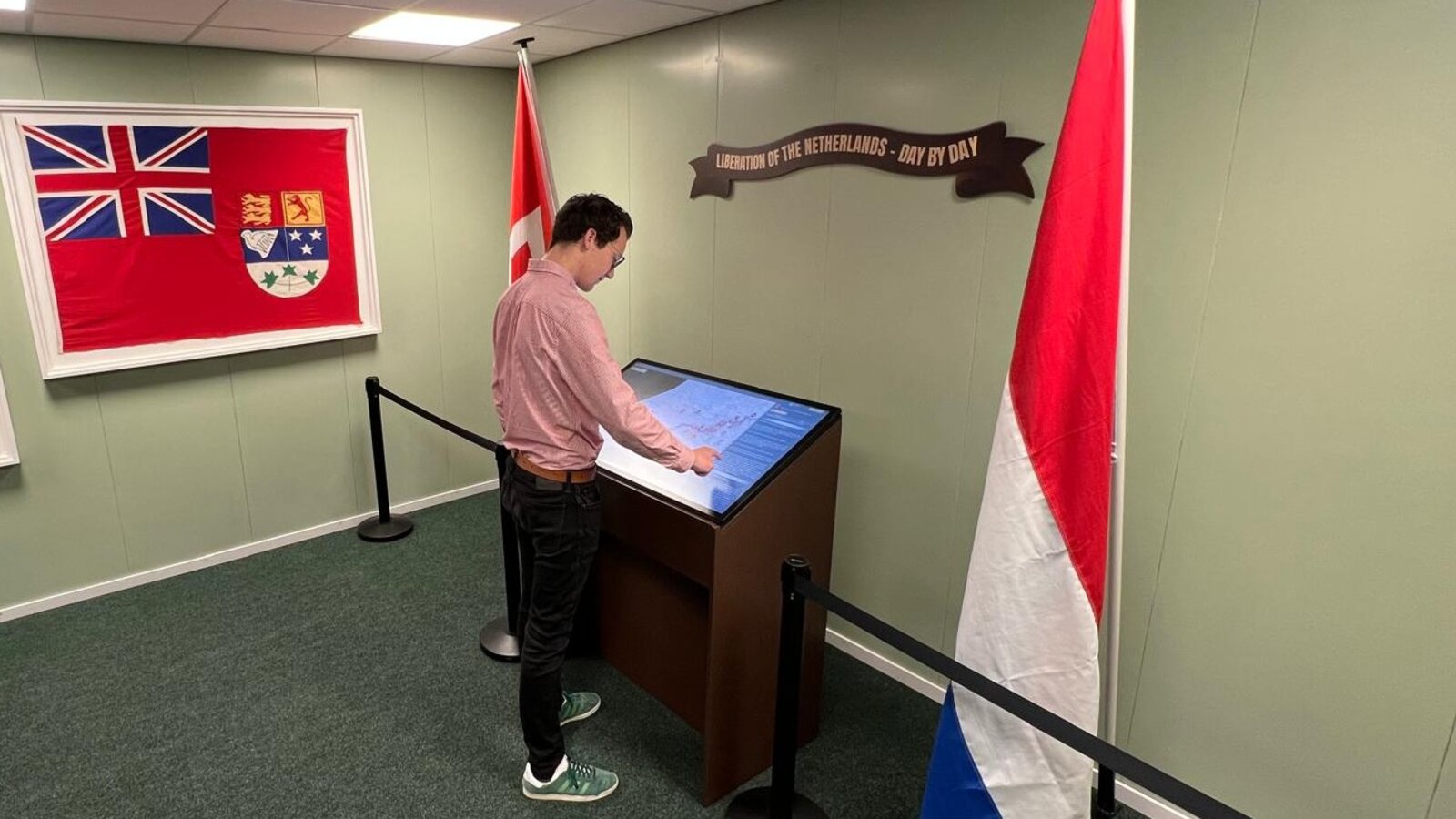
A visitor has two minutes before the tour moves on
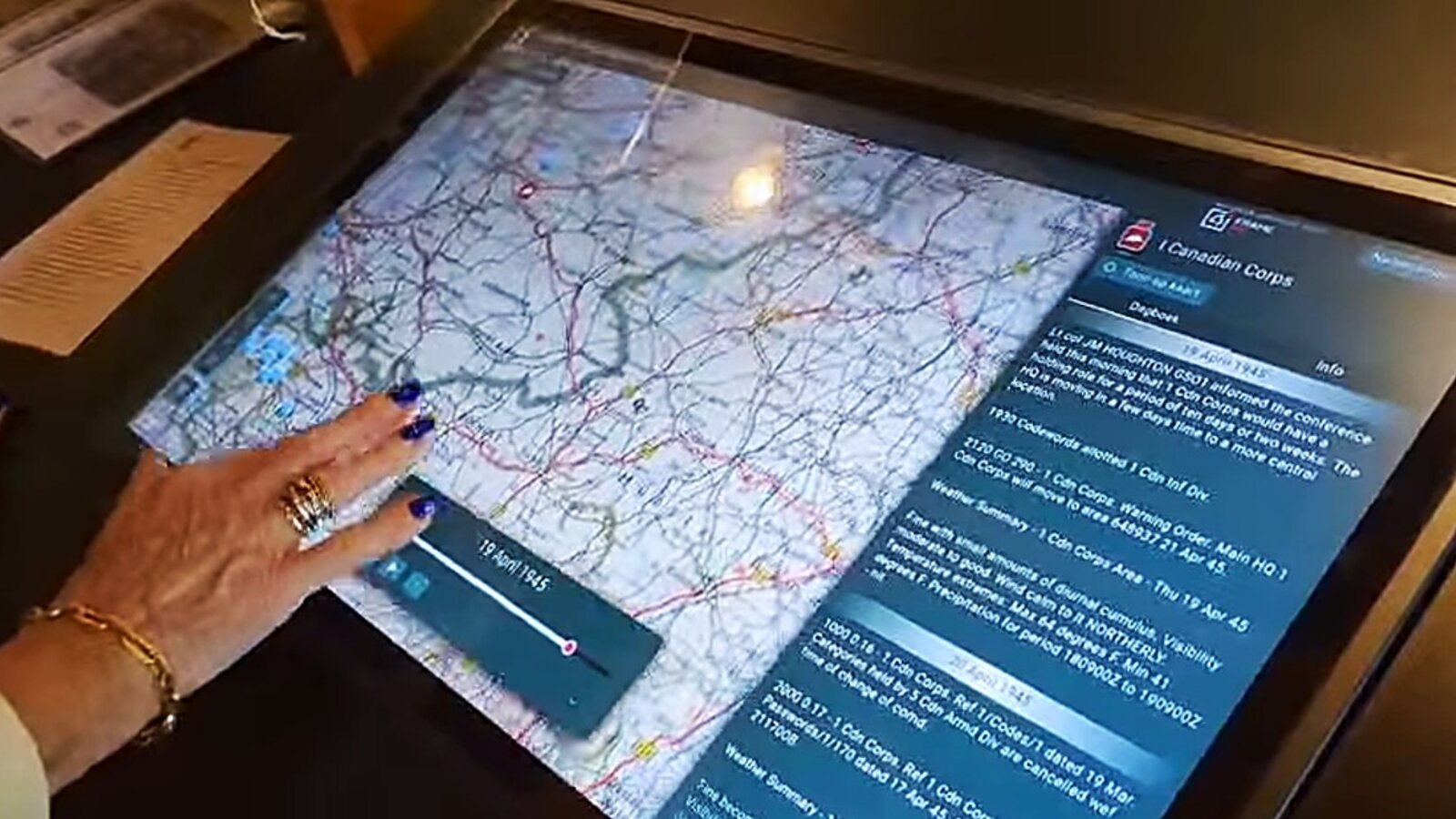
They put a finger on the screen. The map underneath is the ground the patrol actually crossed — the 1944 sheet, not a modern road map with pins dropped on it.
They move the date to the night of 16 June 1944 and follow twenty-three men of the Stormont, Dundas and Glengarry Highlanders out of Vieux Cairon and up the slope toward the German position. They open the patrol report written afterwards — the kind of document that goes into an archive box and is never read again — and find the three trip wires, the S-mine, the flare, and Lt. Williams lying in the grass telling his corporal to carry on.
Then the tour moves on. In two minutes they've walked the last ground L/Cpl George Pollard crossed, and they know why his body was never found.
That's the calibre of story our historians build. We found the war diary entry, then the patrol report, then mapped the route those twenty-three men actually walked. George Pollard's memorial stands today in the Museum of the Stormont, Dundas and Glengarry Highlanders in Cornwall, Ontario.
Most touchscreen exhibits do the opposite — a menu of facts with no story to carry them. We build the story first, and let the archive back it up.